


Freedom of Dissent
Spotlight Report by Samuel Bruce
Freedom is fundamentally important to prosperity. That is why it is one of our domains. Of the three Freedom pillars, the most difficult one to measure is 'Freedom of Dissent'. This aims to estimate the extent to which people in different countries are free from government censorship to express their views, even when critical of mainstream ideologies and those in government authority. It draws on a plethora of global measures related to free speech and constitutional protections for individuals and groups who assemble and express reasonable disagreement over political, religious and other conscience matters.
This is challenging to measure: concepts like 'free speech' and 'freedom of conscience' can be understood in different ways. Data on this is hard to collect globally, and what data exists rests on ethical assumptions we — as consumers of the data — do not wholly share. This spotlight report highlights the central issues and calls for better global data on freedom.
Whilst the data is generally effective at documenting restrictions on freedom of dissent by authoritarian states, creeping censorship in the developed world seems to be poorly accounted for. When JD Vance took the stage at the Munich Security Conference in February 2025, he brought some home truths to his hosts: Europe — the cradle of democracy and enlightened discussion — now has governments that are suppressing dissent and restricting speech.
There have indeed been egregious cases of government restrictions on free speech in Europe in recent years, with The Economist running a piece entitled “Europe’s free-speech problem: J. D. Vance was right”.1 I would concur. And some examples help to illustrate this.
Finnish MP and former interior minister Päivi Räsänen was dragged through the courts with criminal charges by Finnish authorities over tweets quoting the Bible, a radio debate, and a church booklet. After seven years of gruelling litigation, she was in 2026 exonerated by the Finnish Supreme Court in relation to the tweets and radio debate but slapped with a criminal record and fine for a small booklet on Christian marriage she published over 20 years ago. At great expense, she is appealing to the European Court of Human Rights. The Prosperity Institute’s CEO has described her in The Critic as “the face of Europe’s free speech crisis.”2.
Other cases are likewise instructive: on arrival in the UK in 2025, comedian Graham Linehan was arrested on suspicion of inciting violence for posts on X, prompting public outcry and the Metropolitan Police to end their investigation of “non-crime hate incidents”.3 In 2025, following Freedom of Information requests to 35 British police forces, it was reported by The Times that police make 30 arrests per day for offensive online messages.4. In 2024, the Brussels National Conservatism conference was surrounded by a ring of police who were instructed to shut it down. It was only re-opened after an eleventh-hour court hearing. The Belgian prime minister, Alexander De Croo, called the policing moves “unacceptable” and “unconstitutional”.5,6,7.
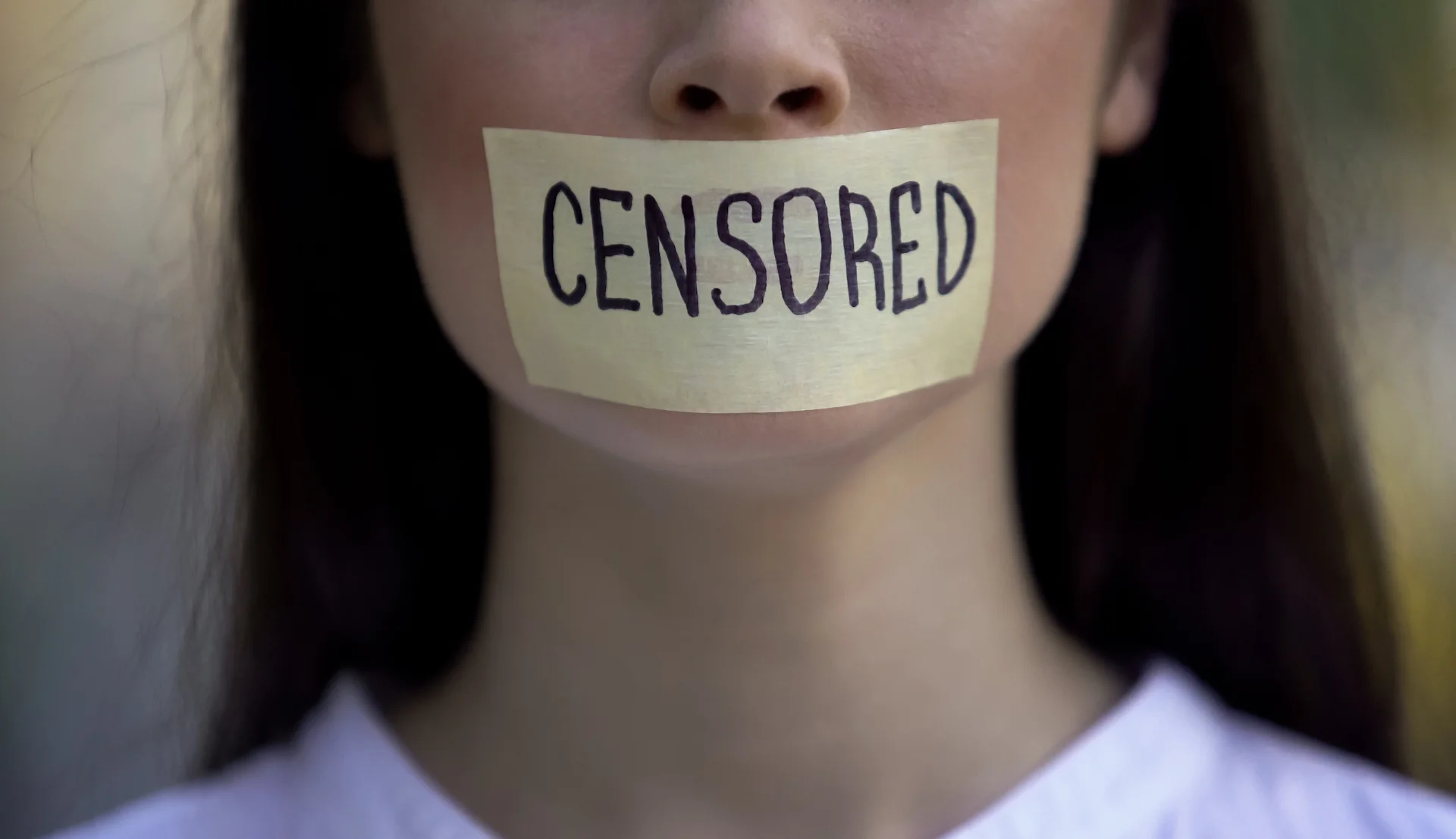
It is clear to us that free speech in Europe faces material threats. And yet, most EU countries perform much better than the USA in our data providers’ reporting. Indeed, the only providers covering these issues in countries across the world point directly to what they describe as assaults on freedom of expression by the Trump administration, with the USA’s rating by the Varieties of Democracy report, better-known as ‘V-Dem’, nosediving since he took office.8 In their 2026 report, they cite the American Civil Liberties Union, Amnesty International and Reporters without Borders as evidence that President Trump is “undermining freedom of expression and the media” and has led to “alarm regarding the suppression of dissenting voices”.9
V-Dem point to examples including:
“the White House deciding which reporters are allowed to cover the president; The Wall Street Journal for its reporting on his ties to convicted sex offender Jeffrey Epstein and The New York Times for its reporting on his finances and the 2024 election; the Department of Defense requiring reporters to publish only ‘authorized’ information; and Trump suggesting that being anti-Trump is ‘probably illegal.’”10.
How can Vance have had the moral authority to criticise Europe’s failings if freedom of expression is in fact worse in the USA than in Europe?
Examining the instances cited in this paragraph, and comparing them to cases in European countries, shows that the reality is more complex. Whilst America is not perfect, Europe also has clear flaws which seem insufficiently accounted for by any existing global data provider. The bottom line is that America’s First Amendment, combined with robust interpretation by the courts, provides strong guarantees against overreach by state actors. By contrast, in Europe, neither of these are present.
Firstly, regarding coverage of the president by the press, this was subject to litigation. A US court restored access for banned Associated Press journalists, with the judge ruling the restriction “contrary to the First Amendment”.11 I agree that the ban should not have been undertaken, but public justice has now run its course. Trump’s personal litigation cited by V-Dem has also thus far not gone in his favour. The first case was dismissed12 and the second was also struck down before an amended (and still pending) version was filed.13 In any case, it is his right to litigate as a private individual if he believes he has been defamed. That is an altogether different proposition to criminal charges for so-called ‘hate speech’ from a public prosecutor as in the Finnish case; something entirely unremarked upon in V-Dem’s report. It should further be noted that in a defamation lawsuit, truth is a vital consideration. In a hate speech case, what matters is the offence caused and hatred expressed. If we care about truth, the two are simply not comparable and more attention should be focused by data providers onto the harms of hate speech laws.
Secondly, to the point about “authorized information”, numerous press outlets challenged this, and a judge struck it down as unconstitutional. Even if the state-led push to restrict free speech was wrong (as was the case over the Finnish bible tweets), justice has now been served. By contrast, in Finland, the court cases dragged on for years through multiple levels of the judiciary.
Finally, as to the Truth Social post that being anti-Trump is “probably illegal”. This speech is wholly unbecoming of the President’s office but can be interpreted as provocative political rhetoric (as is known to be his style on social media) rather than an official statement. It was in response to a comedian who regularly mocks Trump on late night television. In Germany, even insulting a politician is illegal and can carry a prison sentence, but V-Dem makes no mention of this. It was recently reported that “in 2025 there were 4,792 investigations against people who had denigrated politicians in breach of the German Criminal Code”.14.
Looking more broadly at the USA and Europe, there is a marked difference in constitutional arrangements regarding freedom of expression. The First Amendment to the US constitution provides robust, blanket protection of freedom of speech from state censorship. By contrast, in Europe, there are hate speech laws which mitigate against this principle as in the Finnish and British cases cited above. The Brussels National Conservatism debacle also goes unnoticed by V-Dem’s annual reports. The conference was a case of the ‘heckler’s veto’—authorities shutting down legitimate speech on the basis that they can’t contain the hecklers—which is generally treated very unfavourably in American case law and policing practice. I would submit that the US ought to have a higher overall ranking on the basis that its very constitution is at heart animated by a spirit of freedom and free expression, reinforced by robust judicial interpretation, in ways that Europe is not.
The foregoing examination demonstrates that the picture of freedom of speech is more complex than the best-available data would indicate. We would take issue with aspects of the analysis underpinning measures of freedom of expression in the developed world in V-Dem’s data. Its global coverage and granularity are nevertheless helpful, and so we make use of the data it offers from around the world, but we wish to acknowledge that we are not entirely aligned with its analytical principles.
Of all the factors contributing to prosperity, freedom is one of the most challenging to measure. Its conceptual meaning is multi-faceted and methods of measurement in ways that are globally comparable are practically challenging. V-Dem and others do valuable work in covering this issue globally. The fact that it raises and enables questions worthy of global discussion is itself important and is indeed one of the purposes of the Prosperity Index. If we want to promote freedom around the world, we must invite discussion on what it means.
However, above all, this shows the need for far better global data on freedom. Data providers seem not to take adequate account of the harms of hate speech legislation in the developed world. Likewise, the protections of free speech provided by the United States constitution seem insufficiently accounted for. On this basis, we recommend that new data, with alternative conceptual underpinnings, is gathered and made available for the analysis of freedom of dissent around the world.
- The Economist, “Europe’s Free Speech Problem,” 2025. Link available here.
- Paul Coleman, “Päivi Räsänen is the face of Europe’s free speech crisis,” The Critic, 2025. Link available here.
- Emma Saunders, “Met Police says it will no longer investigate non-crime hate incidents,” BBC News website. Link available here.
- The Times, “Police make 30 arrests a day for offensive online messages,” 2025. Link available here.
- Nick Beake and Laura Gozzi, “National Conservatism Conference: Police told to shut down right-wing Brussels event,” BBC News, 2024. Link available here.
- Lisa O’Carroll and Ben Quinn, “NatCon conference resumes after Brussels court overturns closure order,” 2024. Link available here.
- ibid.
- See V-Dem data variable “Freedom of Expression and Alternative Sources of Information Index” within their datasets. Link available here.
- V-Dem Institute, Democracy Report 2026: Unraveling the Democratic Era?, 2026. Link available here.
- V-Dem, ibid, p.37. See section entitled “Trump against the Media: From Rhetoric to Actions.” Each of the claims is referenced and these are not reproduced here to save space. References can be found in the footnotes to this passage in the V-Dem report.
- Ali Abbas Ahmadi, “US court orders White House to restore access for AP journalists,” BBC News, 2025. Link available here; and David Bauder, “AP wins reinstatement to White House events after judge rules government can’t bar its journalists,” Associated Press web site, 2025. Link available here.
- Ana Faguy, “US judge dismisses $10bn Trump defamation suit against Wall Street Journal,” BBC News, 2026. Link available here.
- Khaleda Rahman, “Trump Calls New York Times Story ‘Treasonous,’ Vows to Add to Lawsuit,” Newsweek, 2026. Link available here.
- Chris Gatt, “Germany sees record number of ‘criminal’ insults against politicians,” Brussels Signal, 2026. Link available here.

